









Overview
Shuffle is a breath of fresh air and modernity in the crypto-gambling industry, launched in 2023. The platform quickly gained iconic status thanks to its unique approach to transparency, its own token ($SHFL), and an extremely polished user interface. Shuffle is a No-KYC casino, guaranteeing players full anonymity and instant withdrawals. With a powerful sportsbook, original Provably Fair games, and partnerships with top slot providers, Shuffle is currently one of the best choices for savvy cryptocurrency users.
Editorial score: 4.9 out of 5.
- Welcome bonus: 100% bonus up to 1000 USD on your first deposit. Plus a unique rewards program based on the SHFL token.
- Wagering requirement: 35x
- Minimum deposit: $1
- Minimum withdrawal: $10
- Withdrawal speed: Lightning-fast (Instant)
Figures above come from the operator terms as archived at the time of the review; always confirm current terms with the operator.
Strengths and weaknesses
Weaknesses
Shuffle Casino (Shuffle.com), a no-nonsense review: is it a legit crypto casino, what do withdrawals look like, when does KYC kick in, and where bonuses turn people into victims
Shuffle is the kind of platform that says: “hey, we’re the new generation of crypto casinos.” And then it does everything to make you believe it: the SHFL token, a lottery, provably fair for its in-house games, VIP with rakeback, tournaments, a sportsbook, and of course that immortal slogan “instant crypto payments.” Sounds great. And it can be great. But if you want a real answer to “Shuffle casino reviews / Shuffle withdrawals / Shuffle bonus,” we need to come down from the marketing level to the level of terms and conditions, AML, and how the operator behaves when you want to get your money out.
This Shuffle Casino review is brutally honest, because I have no stake in you clicking “deposit” any faster. My stake is in you not burning your bankroll and not getting stuck at the “account under review” stage. So we’ll do an autopsy: license, KYC/AML, withdrawals, bonuses, VIP, SHFL/the lottery, and the places where crypto casinos most often wreck a player’s day.
30-Second Verdict
Shuffle is a “TEST”, not “PLAY blind”. The platform has a sensible Curaçao license (Curaçao Gaming Control Board), a strong feature set (VIP, tournaments, sportsbook, provably fair) and usually fast crypto withdrawals, but the terms and AML policies make one thing clear: KYC can kick in at any moment, and if there are suspicions/risk, they can turn off the tap until verification is complete. If you want to play without drama: small deposit, short session, test withdrawal, and only then “bigger fun”.
The Trust Score is high for a crypto venue, because Shuffle publishes its license, Terms, AML, Responsible Gambling, plus extensive material on provably fair and limit-setting tools. The Fun Score gets a boost from the “everything in one place” approach: casino + sportsbook + events + SHFL/lottery incentives. The Cashout Pain Score is middling, because while crypto withdrawals can be fast, compliance (KYC/AML, risk, monitoring) can step in exactly when your emotions are running highest.
Pros (the ones you can actually feel)
- License and operator are public: Natural Nine B.V., Curaçao + license number.
- Provably fair for “Shuffle Originals” with verification instructions (seed/nonce/HMAC).
- VIP + rakeback: instant/weekly/monthly mechanics and the option to withdraw rakeback once credited.
- Shuffle Wise / limits: you can set bet and loss limits as well as self-exclusion (rarer in crypto casinos than it should be).
- Sportsbook with clearly described rules (e.g. max win limit on sports).
Cons (where people usually end up crying)
- KYC “at any moment”: the Terms state in black and white that they can hold withdrawals until verification is complete.
- AML and monitoring: the policy talks about collecting data and analyzing transactions, this can create friction with larger amounts.
- Token + lottery add extra incentives: nice, but it can turn the platform into a “daily habit”.
- Bonuses and promos vary by region, what one player sees isn’t necessarily identical for another.
- Local law: online casino rules vary by jurisdiction, which can create legal and practical risks (domain/payment blocks).
Casino Autopsy
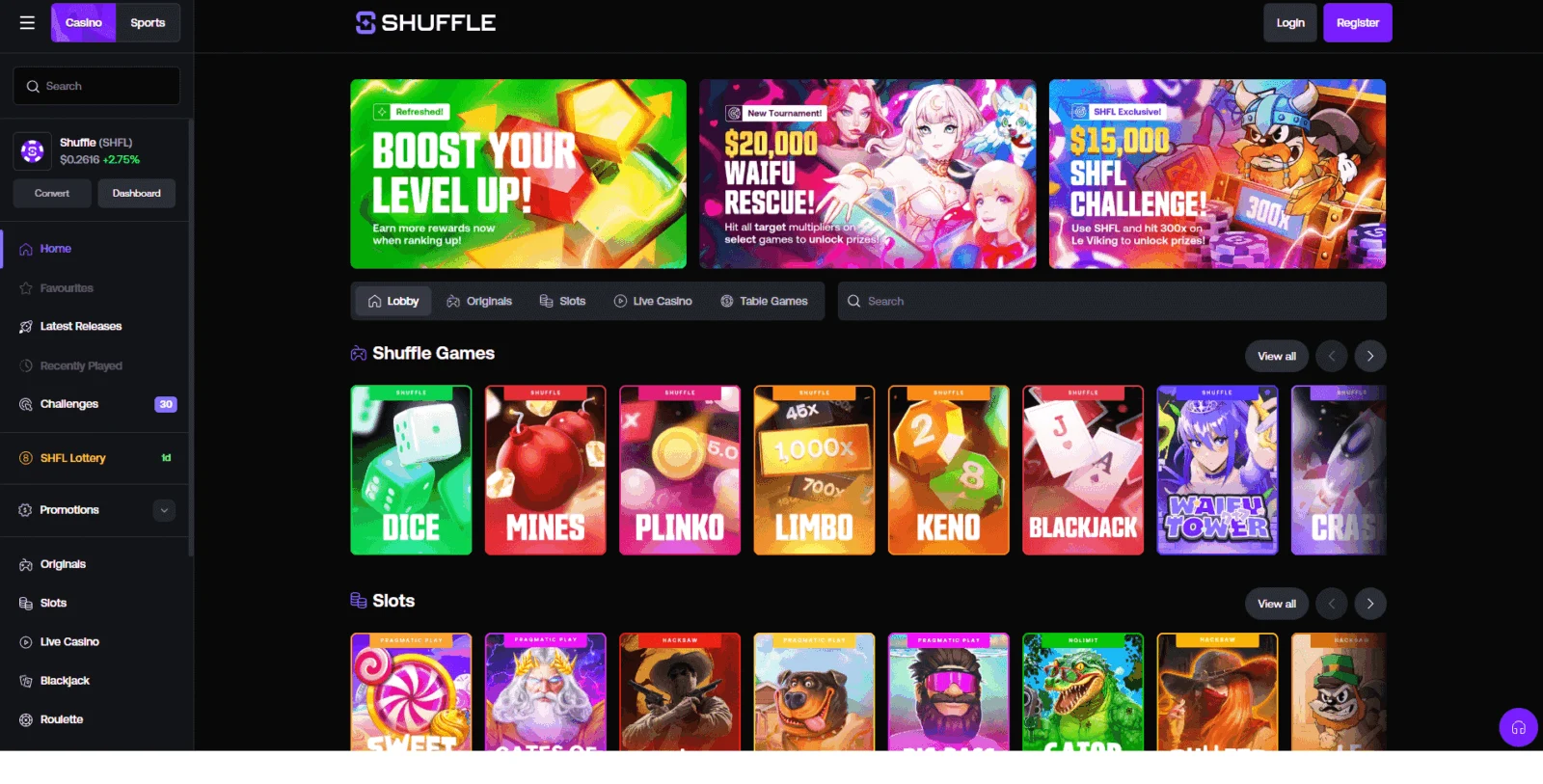
Shuffle is a crypto casino with ambitions of being a “platform”, not just a “casino”. You get a casino with thousands of games from providers, a sportsbook, community incentives (races/leaderboards), VIP, plus an “economy” layer: SHFL token, conversions, lottery. It looks modern. And it is modern. Except modern doesn’t automatically mean “safe for your head”.
The most important part of the autopsy: Shuffle operates on a risk-based compliance model. In practice, that means the platform has the right (and the tools) to verify, check, block and request documents whenever it deems it necessary. And that’s not “evil”, it’s industry standard. The problem starts when a player lives in the fairy tale of “crypto = zero oversight”. No. Crypto = a different kind of oversight.
Casino Vibe Check
Vibe: “premium crypto casino, but with gaming ADHD”. The UI and communication are solid, but there are incentives everywhere: promotions, lottery, token, leaderboards. If you have discipline, great. If you tend to chase losses, this environment is like a club at 3 a.m.: fun, until you do something stupid.
3 things you notice in the first 5 minutes
1) This is not “just a casino”, the sportsbook and promotions are always just one click away.
2) SHFL and the lottery are presented as a feature, not an add-on. That’s a signal: the ecosystem is meant to keep you engaged.
3) Provably fair is heavily highlighted because it’s their “trust us on instant withdrawals” argument.
The Pain Test
This is where the truth about every online casino comes out: as long as you’re depositing, the world is beautiful. The pain starts with withdrawals, bonuses, and verification. Shuffle is honest in that it describes some of this pain directly in its documents. So at least it doesn’t pretend the problem doesn’t exist.
KYC: “at any time” and until the operator is satisfied
In Shuffle’s Terms of Service, there is a clause stating that the platform may request KYC documents at any time to verify your identity, location, or age, and that it may restrict access to services or suspend payments/withdrawals until you meet the verification requirements. This is the most important sentence in your entire journey with Shuffle.com, because it says: when the system decides it needs to check you, your “I want to withdraw now” is not an argument.
AML: data collection + monitoring + “blockchain-native” tools
Shuffle’s AML policy describes its approach to due diligence and monitoring. It includes, among other things, information that it may collect data (e.g., wallet address, personal information) and use external providers for verification. In practice: if you have a “weird” flow of funds, risky sources, or behavior that smells like multi-accounting or bonus abuse, the system may flag you. And that’s when the “review” begins.
Withdrawals: simple to use, but blockchain is unforgiving
Shuffle’s Help Center explains withdrawals very simply: you choose a currency, enter an address and amount, and the network fee (blockchain fee) is deducted from the withdrawal. And most importantly: blockchain addresses are final. If you send to the wrong address, there is no “undo”. This is a real player risk, not a platform risk. That’s why my golden rule is: the first withdrawal is always a test withdrawal (small amount), to the same wallet you deposited from, and ideally after checking the network twice.
Banking Pain Spectrum
6.0/10. Technically, crypto withdrawals are easy. Two things cause pain: (1) review/KYC at the wrong time, (2) user error with address/network. The first depends on risk and compliance, the second depends on you.
Tilt Meter
8.1/10. Shuffle has everything tilt loves: fast games, a sportsbook as “plan B”, promotions as a “reason to come back”, and token/lottery incentives as “one more thing to do”. If “I’ll win it back” comes up often in your vocabulary, be careful.
The Pleasure Test
To be clear: Shuffle isn’t popular for no reason. For many players, it’s simply convenient. The interface is fast, the lobby is huge, crypto works smoothly, and VIP has a clear “rakeback for activity” logic. If you play recreationally and have hard limits, Shuffle can be genuinely enjoyable, especially if you like mixing modes (a bit of slots, a bit of live, a bit of sports).
The second “pleasure” element is provably fair in Originals. This is something that makes sense in crypto casinos because it gives you a technical ability to verify results. It’s not a magic shield against losing (the house edge still exists), but it is a transparency plus for the games the platform fully controls.
Crypto Friendliness Index
9.2/10. Shuffle is built for crypto. Deposits and withdrawals are “native”, and the documents explicitly mention volatility risk and network fees. A minus is that in crypto, the margin for player error is zero.
Fun-to-Money Ratio (my metric)
7.8/10. Emotionally, Shuffle delivers a lot of entertainment, especially if you’re in it for events, leaderboards, and VIP. But this metric has a condition: you control the frequency. If you start coming back every day “because of the lottery”, “because of the token”, “because of the race”, the cost grows faster than the fun. That’s a classic of gamification.
One sentence worth sticking on your fridge: the most profitable session at an online casino is the one you don’t extend just because “there’s still something to collect”.
Games Worth Playing (And the Ones That Aren’t)
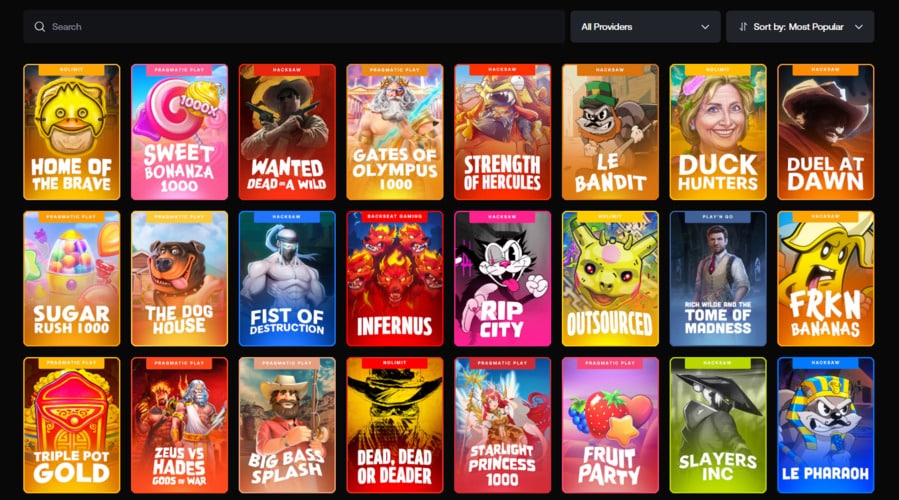
Shuffle has a huge library. And that’s exactly why I won’t make you a “top 100 slots” list, because that’s content for robots. I’ll give you a practical map: which modes are more “controllable”, and which ones most often burn your bankroll.
Games That Slap
Modes that more often let you play slower, rather than just click faster.
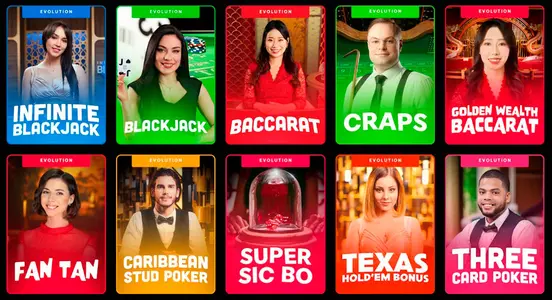
- Live roulette / live blackjack: the pace is naturally slower, and it’s easier to take breaks.
- Mid-volatility slots without compulsive bonus-buy.
- Pre-match sportsbook: if you can plan, rather than chase live losses.
Games That Sleep
Modes that feed tilt and turn a session into a quick downward slide.
- Originals (dice/mines/plinko/limbo) in series: great for 10 minutes, disastrous for 2 hours.
- Crash/instant in ‘I’ll bounce back’ mode: that’s where it’s easiest to hit the gas.
- Jumping from casino → sports → casino after a loss: that’s dopamine, not strategy.
RNG Mood Swing Chart
Originals: 8/10 swings. High-volatility slots: 9/10 swings. Live: 6/10. If you want fewer emotional swings, choose modes that force a pause, not those that reward spam-clicking.
Bonuses, Math vs Marketing
Here is the most deceptive part of the Shuffle.com review, because bonuses are variable and depend on region, active promotions, and codes. However, one thing is constant: a bonus is a contract. If you don’t read the terms, it’s not that „the casino scammed you”. You signed something with your eyes.
Shuffle publishes the terms of some bonuses in the Help Center (e.g., deposit bonus up to $1,000 and minimum deposit of $20 in some promotions). In sports promotions, you also see insurances like refund up to $200 under certain conditions. These are nice things, but remember: each of them has T&C, and T&C are there to limit abuse.
Bonus BS Detector
7.2/10. Not because Shuffle doesn’t pay out, but because promotions are inherently designed around turnover and conditions. If you play little, bonuses rarely „pay off” without cost. If you play a lot, bonuses are a tool, but they can also attract you to too frequent sessions.
My protip for people who want to avoid drama: first deposit without a bonus. Play briefly. Make a test withdrawal. Only then take promotions. It’s like a bike helmet: it doesn’t look sexy, but it saves your head.
Banking, Your Money vs Their System
Shuffle is crypto-first, so the most important concepts are: address, network, fee, confirmations. Help Center emphasizes that the blockchain fee is deducted from the withdrawal and that blockchain withdrawals cannot be reversed. Terms of Service adds the standard: no liability for delays resulting from network times or external payment method providers.
| Element | How it looks in Shuffle | Where friction most often occurs |
|---|---|---|
| Deposits | Crypto / methods available depending on what the platform offers at that time | Network delays, wrong network, „I sent the wrong thing” |
| Withdrawals | Blockchain withdrawals with fee deducted from the amount; procedures compliant with KYC/AML | Review, KYC during cashout, address error |
| Security | Risk-based approach: verification may be required at any time | Multi-accounting, promotion abuse, suspicious sources of funds |
Cashout Stress Meter
6.0/10. Small amounts and clean behavior: usually smooth. Large amounts, non-standard patterns, unclear flow of funds: the risk of review increases. This is compliance logic, not „bad luck”.
VIP Reality Shock
VIP at Shuffle is one of the main marketing arguments, and honestly: it looks solid. The official VIP page explains different types of rakeback (instant, weekly, monthly) and that after it’s credited you can use it to play or withdraw it. The Help Center also describes levels and types of bonuses (daily, weekly, reloads, recent play, monthly) and when they appear.
Now a reality check: VIP is paid through your turnover. No one gives rakeback for „pretty eyes”. If you play a lot and can maintain control, VIP can improve the „value” of entertainment. If you play little, VIP can be a pretext to play more. And then the casino wins, and you tell yourself that „it’s an investment in the level”.
VIP Reality Shock (my scale)
8.3/10. VIP is attractive, but it’s a retention mechanic. Treat it like cashback in a store: a nice bonus if you were already planning to shop. If you only buy for cashback, you are a target, not a customer.
SHFL Token and lottery, a nice addition or a „daily hook”?
Shuffle strongly promotes SHFL: you have a token dashboard, staking, and a lottery, and in the lottery rules it is clearly stated that tickets can be bought or earned through staking SHFL, and the number of participants affects the odds. There is also a separate document „Convert”, which explicitly states the verification requirement (Verify Level 1) to use SHFL Convert and information about a 1x wager requirement on converted SHFL.
All of this can be nice if you are a „crypto gamer” and understand that this is a product: token + community retention mechanics. But if you are a regular casino player, the token and lottery can do one thing: increase the frequency of your visits. And frequency in an online casino is a silent bankroll killer.
Greed Points
6.9/10. I don’t see any “scam vibes” here, but I do see a very effective set of incentives. It’s more elegant than aggressive pop-ups. And that’s exactly why it works.
Mobile Reality Check
Shuffle is comfortable on mobile. But mobile convenience in gambling is always a double-edged sword. If you play on your phone, set limits (wager/loss) and treat them like a wall. Shuffle describes daily/weekly/monthly wager and loss limits in its Help Center. It’s a tool that can genuinely save you from “one more round” at 01:30.
Lag Test: depends on the network and live streams.
One-Hand Test: it passes, which is a warning for impulsive play.
Break Test: if you’re playing because “there’s a VIP reward to claim”, then taking a break is your win.
Red Flags and Green Flags
Red Flags
- KYC can kick in at any time and can hold withdrawals until full verification is complete.
- Token/lottery incentives: they increase session frequency, which increases the risk of losses.
- Blockchain is irreversible: an address/network error = a real loss.
- Local law: a foreign online casino may carry legal and practical risks.
Green Flags
- A clear Curaçao licence with a number and a publicly named operator, Natural Nine B.V.
- Provably fair with documentation, not just a slogan, but verification instructions.
- Responsible gambling tools: self-exclusion (cooldown) and wager/loss limits.
- VIP described in concrete terms: rakeback, recurring bonuses, payout rules.
Verdict, Play, Test or Avoid
Verdict for Shuffle Casino: TEST. This is a polished platform that does many things well (document transparency, provably fair, limit tools, VIP), but it’s not a place where “crypto = no rules”. Quite the opposite: compliance is part of the product, and KYC can kick in at any time.
If you have discipline, play recreationally and make test withdrawals: it may be OK. If you have a history of chasing losses, play impulsively, or token/lottery incentives have become your “daily ritual”: honestly consider AVOID, because this platform is too good at grabbing your attention.
FAQ
Is Shuffle Casino (Shuffle.com) legal and licensed?
Shuffle states that it is owned by Natural Nine B.V. (Curaçao) and operates under a Curaçao Gaming Control Board licence with number OGL/2024/1337/0628. This means the operator presents a formal regulatory basis for offering games of chance in an offshore model.
Shuffle withdrawals, are they fast?
Withdrawals on Shuffle are processed on the blockchain: you choose a cryptocurrency, enter the address and amount, and the network fee is deducted from the withdrawal. Speed depends on the network and any verification procedures (KYC/AML), especially with higher risk or unusual activity patterns.
Does Shuffle require KYC?
Yes, Shuffle reserves the right in its Terms of Service to request KYC documents at any time to verify identity, location or age, and may hold withdrawals until the requirements are met. The AML policy also describes a risk-based approach to due diligence and monitoring.
What is provably fair in Shuffle Originals?
Provably fair is a cryptographic mechanism that allows you to verify the fairness of results in selected in-house games. Shuffle publishes implementation documentation (including client seed, server seed, nonce, HMAC/SHA-256) and instructions on how to check results.
How do VIP and rakeback work at Shuffle?
Shuffle describes VIP as a tier system with various forms of rakeback (instant, weekly, monthly) and recurring bonuses. Once credited, rakeback can be used for further play or withdrawn, in accordance with the VIP rules.
Does Shuffle have responsible gambling tools?
Yes. Shuffle publishes a Responsible Gambling policy and describes tools such as wager limits, loss limits and self-exclusion/cooldown. These are real control tools, if you actually use them.
Can you play at Shuffle where you live?
Online casino rules vary by jurisdiction, so foreign online casinos may not be legal operators where you live. Playing from your location may involve legal and practical risks (e.g. domain/payment blocks).
Responsible gambling (18+): Shuffle has bet and loss limits and self-exclusion. Use them before you click “spin”. And please: do not treat an online casino as a way to make money. It is entertainment with a house edge. Your only edge is the ability to walk away in time.
Visit Shuffle
This link is an affiliate link. It does not change the terms you get, and it never changes what we write.
Shuffle: common questions
Yes, Shuffle is safe and legit. It has a 4.9/5 rating, established in 2023, is VPN friendly, and offers 24/7 live chat.
Withdrawals at Shuffle are lightning-fast and instant.
No mandatory KYC is required for crypto play at Shuffle. Verification may be required for fiat withdrawals.
Shuffle's welcome offer is a 100% bonus up to $1,000 on first deposit plus SHFL rewards, with 35x wagering.
Shuffle supports 9 payment methods and 9 cryptocurrencies. Specific details are not provided, but expect a variety of crypto options.